I’m no loser Baby, It’s time for somebody to pay me! Motivational Circuit Welcomes Bill Bartmann who shows you how to “milk your losses” and earn money by learning from your failures.
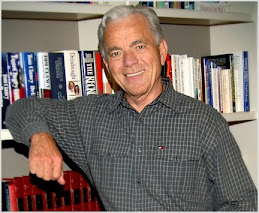
These days you can find Bill Bartmann speaking at day long motivational seminars such as Reno-Sparks Convention Center in Nevada. He has much to share. Bill Bartmann has been well-known in the financial world, and business schools have studied his then-pioneering approaches to raising money. Bill Bartmann's physical presence can be intimidating: He has a compact body, a rough voice, and an almost feral energy. His hands are those of someone who spent his adolescent years brawling. Bill Bartmann wears a tight-fitting shirt and dark suit.
This is Bill Bartmann’s preamble "The secret of success is elegantly simple, like the law of gravity. This is how the world works: You need to be willing to take risks. You don't because you are afraid of failure; you are worried about what people will think. And that's because of low self-esteem. To succeed, you have to raise your self-esteem. He believes that its advice can change lives. Bill explains that this was a major factor of his success that he can offer for why he became a billionaire and some listening to him possibly haven't even come close.
Bill Bartmann 58, made (and lost) his fortune in the debt collection business. His rise and fall brought him to national attention. He has seen both sides of self-esteem. Bill shares, “I’ve lived it”. Bill Bartmann knows about going from poverty, and being a million dollars in debt or being ready for welfare to being one the wealthiest person in America. From being a high-school dropout to going through a significant, some say remarkable, transformation. Like being named a National Entrepreneur of the Year twice, Bill Bartman learned how to change first hand. He has seized opportunities and is among survivors of all kinds who have changed their lives. Bill Bartmann is committed to inspire and train, employees, former executives, sports coaches, entrepreneurs or anyone else wanting to change. To help them find the inspiration and motivation that leads you to action. Motivation, in all its guises is the cornerstone for taking action and making changes. Bill Bartmann thinks he has a big idea that is going to transform his life and yours. A slice of the American Fantasy and dream as it were a peculiarly American belief in reinvention. Bill Bartmann is one of those who have overcome adversity. Bill wants to be one of those who can unlock the big ideas, the supposed secrets of achievement for you. Motivation can be an animating force for everything you want to do. Redemption is big,” In his quest to be a motivational speaker, Bartmann carries around a laminated card in his pocket. On it is typed the following goal: Touch 10 million people in five years. "It's a giant, crazy, ludicrous number," he says. "Can I touch enough people. He is not like Dale Carnegie telling you How to Win Friends & Influence People, or The 7 Habits of Highly Effective People, or even how to be Looking Out for #1. He is about having you see "Failure Is Not Final", but you have to understand the value of being authentic. You have to respect that." Bill feels the one thing everyone needs is self-confidence." Everyone has setbacks but you can prosper in any circumstances, but you have to admit you've failed and stop covering up. You don’t have to be like the guy who chopped off his arm to save his life (Aaron Ralston), but honestly, start thinking “Yes you can” and get out of the Hype you tell yourself. Get yourself motivated to taking action in what you learned from the failure. Life is a traveling carnival, and you have to ask yourself, Why am I an authority? Because it is my life. You don’t know where you’re next Big Idea can come from, what career path will lead to success and fortune. What still unproven action will capture your imagination and lead to that long coveted success
In business, it is the adversity of your own making, learning from failure that has you make personal changes you need to. By anyone's estimation, Bill Bartmann's life has been one of head-swelling highs and depressing lows. Bartmann made his first fortune running a company that manufactured oil pipes. In 1985 the collapse of crude prices left him without any customers and a million dollars in debt. He had started Commercial Financial Services Inc., a year later. Bartmann and his wife, Kathy, who together owned 80% of CFS, made Forbes' list of the 400 wealthiest Americans. In 1997 Forbes magazine estimated the couple to be worth about $1.1 billion. The Tulsa community soon became familiar with his unique swagger. Bill Bartmann traveled with a security detail, didn't join the country club as was expected, and worked in an office with a statue of Don Quixote. He did not fit on conventional lists. In fact his wife Kathy once said, "I don't care if I'm on any lists, if anyone knows me,’’ but Bill and Kathy were getting rich.
A few skeptics wondered at the company's rapid growth; but, in 1994 by many accounts, its revenues had doubled every year! CFS had become the world's largest holder of bad consumer debt; unlike its competitors it owned the debt outright and was trying to collect on some $14.5 billion. He was among the biggest employers in the Tulsa business community. In the summer of 1998, CFS was reckoned to be worth $3 billion.
The Goldman Sachs Group Inc. proposed taking the company public.
Four months later, credit agencies received an anonymous one-page letter accusing CFS of shady dealings. Bartmann was indicted on 57 federal counts of fraud, conspiracy, and money laundering related to an alleged scheme to make the company's collection rate appear higher than it was. After an 89-day trial in 2003, Bill Bartmann was proven 100% innocent and acquitted of all Charges. His partner, Jay L. Jones, pleaded guilty to conspiracy and served 3 1/2 years of a five-year prison term). Jones, a 20% business partner, had formed Dimat without Bill Bartmann's knowledge to purchase and resell bad loans on the side. Jones had convinced Bill to buy his stock at a much reduced rate. But there's one thing all parties seem able to agree on: Bartmann came away from the mess nearly broke. Mike Zarrilli, his former contact at Chase said, “Whatever Bill was doing, it doesn't appear he was doing it to put short-term cash in his pocket." It doesn’t appear that any lack of integrity was shown by Bill Bartmann’s. He suffered along with all the other employees. Bill was facing bankruptcy, Bartmann, 58, had made (and lost) his fortune in the debt collection business. It took Bartmann until 2006 to contend with various civil suits. He and Kathy had to give up 19 acres of their 20-acre estate.
He had to come up with his own affirmation of sorts, and motivate himself to come up with his next Big Idea, his own answer and take action! The wild arcs of his life offered valuable lessons! He looked at his early life and noticed his credibility, as someone who can prosper in any circumstances. In general, he says "I think I am the message, the answer. The one thing everyone needs: self-confidence." A 2001 New Yorker profile described him as having "an uncanny gift for making those who work for him feel that they share in his powers." Bill Bartmann became interested in motivating others. Bill would become a successful motivational speaker. He would inspire others to admit their failures, learn from them, and use them. Bartmann would do what others had done. Bill Bartmann would join the tradition of teaching success with such honored inspirational notable players as; Benjamin Franklin, Robert J. Ringer, Dale Carnegie, Tony Robbins, Stephen R. Covey, and Zig Ziglar Jonathan Black, Donald Trump, George Foreman.
Motivation, in all its guises, could make a difference for people. Bill could offer seminars, workshops, executive coaching, personal coaching consulting, and year long mentor programs that would help people move beyond their failures. One of the disclaimers he has been know to start his seminar with is:
"I'm awkward about this. I haven't set you up for the kill," he says. "I don't want to be a snake-oil salesman. I'm in the motivational, self-help industry. It's an industry that ranks right there with car salesmen. I don't know if I'm any better, any different, but I do know a few things....
Bill Bartmann wants to join you on the road to success. He’s been known to say, if I touch enough people, I'll be a financial success." Bill has been a self made billionaire and is about creating financial success for himself and others. Bill Bartmann has been reported saying, “I've moved from success to significance." If I touch enough people, I'll be a financial success."
Bartmann has also made a decision that all profits from his mentoring program, for which he now charges $797 a month, and his appearances at Get Motivated! Tours (where he is one of dozens alongside George Foreman and Zig Ziglar) and Learning Annex Real Estate and Wealth Expos (where he is one of dozens alongside Donald Trump and Tony Robbins) will go into a foundation called Bill's Brigade. The foundation's aim is to gather 70,000 high school kids in the Texas Stadium in Dallas for a self-esteem revival meeting.
In March, Bartmann found himself in Hollywood, where the idea of him hosting a "Dr. Failure" talk show somehow, wondrously, came up. Bartmann was ready to tell his whole story. "I talk about CFS first.... There is no more compelling story. Kathy said I should quit acting like I'm ashamed. It makes everyone else's problems seem smaller. It gives them permission to tell me about their problems." He came up with a new goal, a new pitch: "To do for failure what Betty Ford did for alcoholism and Susan Komen did for breast cancer."
This article was written by Marcus Maupin, who describes Bill Bartmann as the ultimate underdog/survivor/achiever, overcoming personal circumstances and tragedy to rise to the top enterprise in America. If you want to know how to overcome and come out on top—He’s your man. Bill has left a legacy of stellar accomplishments and overcoming the failures life brings you. Bill’s testimonials and accomplishments reads like a “Who’s Who” list, ranging from Mother Terressa and Bill Crosby to Zig Zieglar.
Showing posts with label success. Show all posts
Showing posts with label success. Show all posts
Saturday, May 16, 2009

Tuesday, February 3, 2009
Billionaire Bill Bartmann Builds Self-Esteem and Self-Confidence
Billionaire, Bill Bartmann, has discovered that self esteem is crucial to your success and your life. It is very important because it affects how you think, act and relate to other people.
Billionaire, Bill Bartmann, has discovered that self esteem is crucial to your success and your life. It is very important because it affects how you think, act and relate to other people. Low self esteem means negative thoughts and poor self-confidence which affects your potential to be successful. Your self esteem has a direct bearing on your happiness and well being.
Why is Self-Esteem Important?
• Self esteem affects your confidence and your self image
• Self esteem affects your outlook on life
• Self esteem affects your behavior, your thinking and your happiness
• Self esteem affects your ability to succeed in your career
You must value yourself in order to be valuable to others. Your self esteem can be the difference between success and failure. Your potential to achieve your goals and what you value the most is directly related to your self esteem. You are much more likely to fail if you have a low self esteem.
Bill Bartmann has experienced ups and downs, but not failure. Though he has built two different multi-million dollar businesses that went bankrupt, he did not fail. He learned from his experience and he bounced back. Everyone has ups and downs, or they would not be human; how you react to and deal with the ups and downs is directly related to your self-esteem.
Bill Bartmann believes in the importance of positive thinking to increase one’s self-esteem to benefit in all areas of life; work and play. Positive thinking and self-confidence are the keys to maintaining a high self-esteem.
Self-Esteem and Self-Confidence
Self esteem and self confidence go together; they are both vital to happiness and success. Lack of self confidence hinders your ability to face life’s challenges and cope with life’s difficulties.
Self confidence comes from within yourself, from others and from your accomplishments. If you are lacking in self confidence it could be that you are overly critical of yourself. Do you expect to fail? Do you think you are not good enough? Do you believe others when they make negative comments about you? It could be that they lack self confidence; therefore, they feel better when they put you down. Do not accept negative comments from others; prove them wrong.
Building Self-Confidence
Bill Bartmann has had his moments of feeling down and out; everyone does at some point in their life. It’s part of what makes us human. The important thing is to recognize what is happening and respond to it in a positive way. When you find yourself being negative, ask yourself if it really is true. Are you really stupid? Is it true that you are hopeless and that you cannot succeed?
The key to building self-confidence is to end the negative thinking. Question the negative thoughts you may be having and you will see that they are distorted. Think of what you have achieved and what you can do to continue moving forward. If things are really bad, you might need to step away and focus on something else, and then come back to address the problem later. Read an inspirational book or try watching a comedy. Like the feature in Reader’s Digest, “Laughter is the Best Medicine.”
Here are some tips from Bill Bartmann for building self confidence:
• Surround yourself with others who are self-confident
• Model their attitude; what makes them appear confident?
• Focus on your strengths rather than your weaknesses; your achievements rather than your failures
• Act confident to feel confident
• Set small, reachable goals; when you achieve them, set new ones
• Reward yourself each time you reach one of your goals
• Remember to relax and take time for recreation
• Take care of yourself, physically; eat right and exercise. Caring for the body helps care for the brain.
Negative thinking is the biggest obstacle to high self-esteem and self confidence. Avoid contact with people who are always down on themselves. Do not expect too much; set small goals rather than overwhelming yourself with unrealistic goals. It’s OK to have a large, long-term goal, but setting and meeting smaller goals gives you a sense of pride and accomplishment as you get closer to reaching your ultimate goal. It also leaves room for changing direction when necessary rather than feeling you have failed if you do not reach the goal you have set.
Bill Bartmann is a self-made billionaire who went from homeless at the age of 14 to becoming a billionaire, going bankrupt, then bouncing back to do it again! Bill has had his self-doubts and even bouts of depression; he wouldn’t be human otherwise. However, when self-esteem is strong and you’re clear about your values, then you can bounce back from the lows; each time, you bounce back just a little bit higher. Learn more at http://www.billionaireu.com
Billionaire, Bill Bartmann, has discovered that self esteem is crucial to your success and your life. It is very important because it affects how you think, act and relate to other people. Low self esteem means negative thoughts and poor self-confidence which affects your potential to be successful. Your self esteem has a direct bearing on your happiness and well being.
Why is Self-Esteem Important?
• Self esteem affects your confidence and your self image
• Self esteem affects your outlook on life
• Self esteem affects your behavior, your thinking and your happiness
• Self esteem affects your ability to succeed in your career
You must value yourself in order to be valuable to others. Your self esteem can be the difference between success and failure. Your potential to achieve your goals and what you value the most is directly related to your self esteem. You are much more likely to fail if you have a low self esteem.
Bill Bartmann has experienced ups and downs, but not failure. Though he has built two different multi-million dollar businesses that went bankrupt, he did not fail. He learned from his experience and he bounced back. Everyone has ups and downs, or they would not be human; how you react to and deal with the ups and downs is directly related to your self-esteem.
Bill Bartmann believes in the importance of positive thinking to increase one’s self-esteem to benefit in all areas of life; work and play. Positive thinking and self-confidence are the keys to maintaining a high self-esteem.
Self-Esteem and Self-Confidence
Self esteem and self confidence go together; they are both vital to happiness and success. Lack of self confidence hinders your ability to face life’s challenges and cope with life’s difficulties.
Self confidence comes from within yourself, from others and from your accomplishments. If you are lacking in self confidence it could be that you are overly critical of yourself. Do you expect to fail? Do you think you are not good enough? Do you believe others when they make negative comments about you? It could be that they lack self confidence; therefore, they feel better when they put you down. Do not accept negative comments from others; prove them wrong.
Building Self-Confidence
Bill Bartmann has had his moments of feeling down and out; everyone does at some point in their life. It’s part of what makes us human. The important thing is to recognize what is happening and respond to it in a positive way. When you find yourself being negative, ask yourself if it really is true. Are you really stupid? Is it true that you are hopeless and that you cannot succeed?
The key to building self-confidence is to end the negative thinking. Question the negative thoughts you may be having and you will see that they are distorted. Think of what you have achieved and what you can do to continue moving forward. If things are really bad, you might need to step away and focus on something else, and then come back to address the problem later. Read an inspirational book or try watching a comedy. Like the feature in Reader’s Digest, “Laughter is the Best Medicine.”
Here are some tips from Bill Bartmann for building self confidence:
• Surround yourself with others who are self-confident
• Model their attitude; what makes them appear confident?
• Focus on your strengths rather than your weaknesses; your achievements rather than your failures
• Act confident to feel confident
• Set small, reachable goals; when you achieve them, set new ones
• Reward yourself each time you reach one of your goals
• Remember to relax and take time for recreation
• Take care of yourself, physically; eat right and exercise. Caring for the body helps care for the brain.
Negative thinking is the biggest obstacle to high self-esteem and self confidence. Avoid contact with people who are always down on themselves. Do not expect too much; set small goals rather than overwhelming yourself with unrealistic goals. It’s OK to have a large, long-term goal, but setting and meeting smaller goals gives you a sense of pride and accomplishment as you get closer to reaching your ultimate goal. It also leaves room for changing direction when necessary rather than feeling you have failed if you do not reach the goal you have set.
Bill Bartmann is a self-made billionaire who went from homeless at the age of 14 to becoming a billionaire, going bankrupt, then bouncing back to do it again! Bill has had his self-doubts and even bouts of depression; he wouldn’t be human otherwise. However, when self-esteem is strong and you’re clear about your values, then you can bounce back from the lows; each time, you bounce back just a little bit higher. Learn more at http://www.billionaireu.com
Tuesday, January 20, 2009
Bouncing Bill Bartmann: From Billionaire to Bankruptcy - Bouncing Back to Billionaire - Bill Bartmann's Experience
BY SCOTT S. SMITH
Bill Bartmann is worth hundreds of millions of dollars—and most people have never heard of him. It is quite possible that this entrepreneur started off with less and has overcome more than any other person to appear on the Forbes 400 list. After the roller coaster of events that have defined his career, Bartmann started the Billionaire Business School. His seminars and workshops aim to show people that they, too, can follow in his footsteps, regardless of how much money they have or any obstacles that may stand in the way.
Bartmann was one of eight children, born to a father who never earned more than $6,000 a year as a janitor and a mother who cleaned houses in an attempt to make ends meet. Lining up each month to receive government food handouts was a common family trip. They moved often in his first 14 years, and several of the houses were condemned as unfit for human habitation.
At 14, Bartmann left his family. He joined a street gang, got rejected by the Marines and joined a traveling carnival. This was followed by a string of low-wage jobs that included logging, laying sod and washing cars. Things were not looking good.
Then, the real bad luck started. When Bartmann was 17, he came home intoxicated one night and fell down a flight of stairs, paralyzing him from the waist down. Although the doctor said he would never walk again, Bartmann was determined to prove him wrong. Five months of hard work and determination later, he walked out of the hospital on his own two feet.
“Sometimes you need a negative motivator to build your self-esteem,” Bartmann says. He explains that if you have a positive self-image, you can separate specific failures from who you really are. “Any failure can be overcome if you don’t over-generalize it,” he says. “You have to see it as something that happened to you. It doesn’t determine your real value. The main cause of failure is the inability to deal with self-doubt.”
Bartmann emphasizes the idea that you have to work hard for something rather than just sit around and wish for it. Case in point: He took the high school graduation equivalency test, put himself through college and, in 1975, graduated from law school. After practicing law for five years, he started his first company, in real estate development, which gave him the experience he needed for his foray into oil and gas drilling.
Bartmann’s first big break came in the mid’80s when, at the request of a local bank in Muskogee, OK, he took over bankrupt Hawkeye Pipe Services, a pipe manufacturer for oil rigs. He told the bank the business was still viable, got funding for it, and under his leadership, the company had sales of $1 million a month. Then, in October 1985, with the OPEC oil cartel in disarray, prices fell dramatically. Bartmann was forced to close the company and left with $1 million in debt.
Soon after, creditors were hounding Bartmann at all hours, demanding payments and threatening lawsuits and re-possession of his car. He was committed to repaying the debt and, with help from his former chief operations officer, began scanning business opportunity ads. They noticed the FDIC was auctioning off delinquent loans. It sounded like throwing good money after bad, but they went to the auction anyway—sticking to back roads because they didn’t have the 40 cents for the Interstate toll.
While inspecting the 200 bad loans, it occurred to Bartmann there might be a way to collect the money. He was eager to veer as far away from the strategy of intimidation—an approach that had been applied to him in the past—as possible. “Meanness not only wasn’t fair, it wasn’t productive,” he says. He persuaded a bank to lend him and his partner $13,000 and ended up with a return of $64,000.
Soon after, Commercial Financial Services was born. Bartmann continued using the nice-guy approach to collect small credit card debts. CFS bought debt outright, giving customers flexibility in the amount they would need for settlement and how much time they could take to pay.
Bartmann was able to improve his cash flow with another innovation: bundling loans and securitizing them into bonds, which received A ratings from Standard & Poor’s index. In September 1998, he appeared on the cover of Inc. magazine with the headline, “The Billionaire Nobody Knows.” At the time, the privately held company was estimated to be worth anywhere from $3 billion to $5 billion, owned primarily by Bartmann and his wife, Kathy, and had 3,900 employees.
The following month, trouble hit. He learned that a business partner had embezzled millions of dollars, and as soon as the accusation of fraud was made, the bonds became liabilities. By July 1999, Bartmann declared bankruptcy. “When sharks smell blood in the water, it’s too late,” he says of the collapse.
The misfortune did not end there. In December 2002, Attorney General John Ashcroft indicted him for fraud, even though his partner said Bartmann had no knowledge of the embezzlement. But it was the heyday of corporate mismanagement scandals, and the government didn’t want to be accused of overlooking any offenders. By the time he was cleared of all charges a year later, Bartmann had spent $4.5 million to defend himself and investigate what had happened at CFS.
“I’m not bitter because look at what I still have,” he says, referring to not only money in the bank, but also his wife, two daughters and two grand-kids—whom he brings up on stage at his presentations. “This is what success is really about,” he tells audiences at his Billionaire Business School seminars, which drew 280,000 attendees in 2007.
Bartmann says that most people simply do not have basic business management skills, which is why the failure rate of small companies is so high. His mission is to combat this problem, recently launching Billionaire U, which off ers online courses for just $100 a year. His website had a million hits last year, but he expects the new low price to attract 10 times that many this year.
As Bartmann puts it, “I’m not making as much money as I did with my last company, but I’m having a lot more fun.”
Bill Bartmann is worth hundreds of millions of dollars—and most people have never heard of him. It is quite possible that this entrepreneur started off with less and has overcome more than any other person to appear on the Forbes 400 list. After the roller coaster of events that have defined his career, Bartmann started the Billionaire Business School. His seminars and workshops aim to show people that they, too, can follow in his footsteps, regardless of how much money they have or any obstacles that may stand in the way.
Bartmann was one of eight children, born to a father who never earned more than $6,000 a year as a janitor and a mother who cleaned houses in an attempt to make ends meet. Lining up each month to receive government food handouts was a common family trip. They moved often in his first 14 years, and several of the houses were condemned as unfit for human habitation.
At 14, Bartmann left his family. He joined a street gang, got rejected by the Marines and joined a traveling carnival. This was followed by a string of low-wage jobs that included logging, laying sod and washing cars. Things were not looking good.
Then, the real bad luck started. When Bartmann was 17, he came home intoxicated one night and fell down a flight of stairs, paralyzing him from the waist down. Although the doctor said he would never walk again, Bartmann was determined to prove him wrong. Five months of hard work and determination later, he walked out of the hospital on his own two feet.
“Sometimes you need a negative motivator to build your self-esteem,” Bartmann says. He explains that if you have a positive self-image, you can separate specific failures from who you really are. “Any failure can be overcome if you don’t over-generalize it,” he says. “You have to see it as something that happened to you. It doesn’t determine your real value. The main cause of failure is the inability to deal with self-doubt.”
Bartmann emphasizes the idea that you have to work hard for something rather than just sit around and wish for it. Case in point: He took the high school graduation equivalency test, put himself through college and, in 1975, graduated from law school. After practicing law for five years, he started his first company, in real estate development, which gave him the experience he needed for his foray into oil and gas drilling.
Bartmann’s first big break came in the mid’80s when, at the request of a local bank in Muskogee, OK, he took over bankrupt Hawkeye Pipe Services, a pipe manufacturer for oil rigs. He told the bank the business was still viable, got funding for it, and under his leadership, the company had sales of $1 million a month. Then, in October 1985, with the OPEC oil cartel in disarray, prices fell dramatically. Bartmann was forced to close the company and left with $1 million in debt.
Soon after, creditors were hounding Bartmann at all hours, demanding payments and threatening lawsuits and re-possession of his car. He was committed to repaying the debt and, with help from his former chief operations officer, began scanning business opportunity ads. They noticed the FDIC was auctioning off delinquent loans. It sounded like throwing good money after bad, but they went to the auction anyway—sticking to back roads because they didn’t have the 40 cents for the Interstate toll.
While inspecting the 200 bad loans, it occurred to Bartmann there might be a way to collect the money. He was eager to veer as far away from the strategy of intimidation—an approach that had been applied to him in the past—as possible. “Meanness not only wasn’t fair, it wasn’t productive,” he says. He persuaded a bank to lend him and his partner $13,000 and ended up with a return of $64,000.
Soon after, Commercial Financial Services was born. Bartmann continued using the nice-guy approach to collect small credit card debts. CFS bought debt outright, giving customers flexibility in the amount they would need for settlement and how much time they could take to pay.
Bartmann was able to improve his cash flow with another innovation: bundling loans and securitizing them into bonds, which received A ratings from Standard & Poor’s index. In September 1998, he appeared on the cover of Inc. magazine with the headline, “The Billionaire Nobody Knows.” At the time, the privately held company was estimated to be worth anywhere from $3 billion to $5 billion, owned primarily by Bartmann and his wife, Kathy, and had 3,900 employees.
The following month, trouble hit. He learned that a business partner had embezzled millions of dollars, and as soon as the accusation of fraud was made, the bonds became liabilities. By July 1999, Bartmann declared bankruptcy. “When sharks smell blood in the water, it’s too late,” he says of the collapse.
The misfortune did not end there. In December 2002, Attorney General John Ashcroft indicted him for fraud, even though his partner said Bartmann had no knowledge of the embezzlement. But it was the heyday of corporate mismanagement scandals, and the government didn’t want to be accused of overlooking any offenders. By the time he was cleared of all charges a year later, Bartmann had spent $4.5 million to defend himself and investigate what had happened at CFS.
“I’m not bitter because look at what I still have,” he says, referring to not only money in the bank, but also his wife, two daughters and two grand-kids—whom he brings up on stage at his presentations. “This is what success is really about,” he tells audiences at his Billionaire Business School seminars, which drew 280,000 attendees in 2007.
Bartmann says that most people simply do not have basic business management skills, which is why the failure rate of small companies is so high. His mission is to combat this problem, recently launching Billionaire U, which off ers online courses for just $100 a year. His website had a million hits last year, but he expects the new low price to attract 10 times that many this year.
As Bartmann puts it, “I’m not making as much money as I did with my last company, but I’m having a lot more fun.”
Subscribe to:
Posts (Atom)